
Billionaire Circles Shift Toward Time Ownership Assets Including Personal Time Zones and Controlled Daylight Environments
By
John Carter
Last updated:
April 22, 2026
First Published:
April 22, 2026

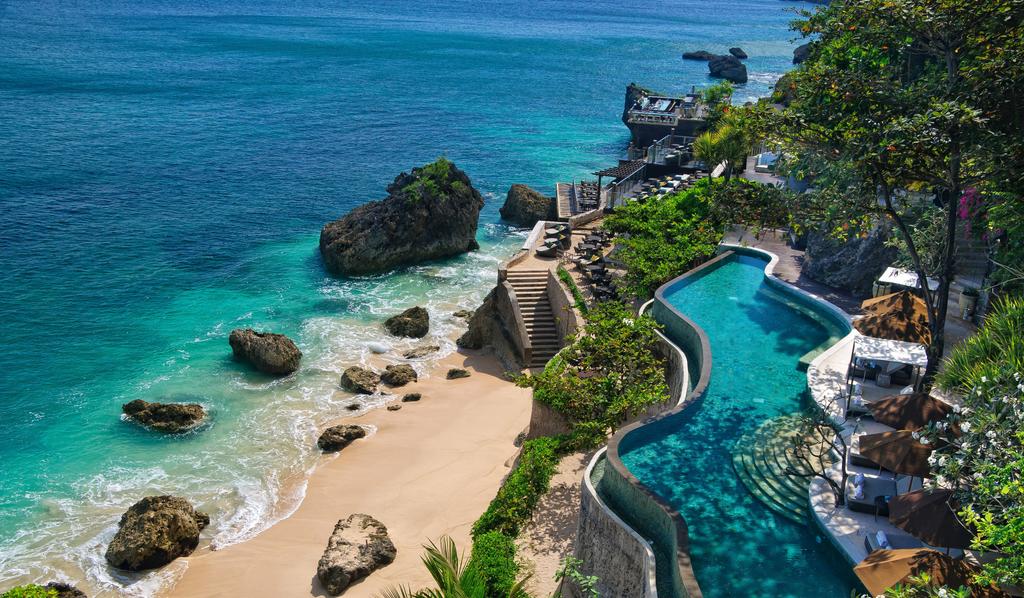
Photo: The Star
In 2026, one of the most unconventional shifts in ultra luxury living is emerging around the concept of time ownership. Billionaire circles are increasingly investing in engineered temporal environments where time is not just experienced but customized. These developments include personal time zones, controlled daylight systems, and artificially regulated circadian environments designed to optimize productivity, wellbeing, and exclusivity.
At the core of this trend is a growing dissatisfaction with standardized global time structures. For individuals operating across multiple continents and markets, traditional time zones are often inefficient and restrictive. In response, private estates and luxury compounds are beginning to implement localized temporal systems that allow residents to experience time in ways that align more closely with their personal and professional rhythms.
Personal time zones are not literal changes to global timekeeping but controlled environmental simulations. Within private residences or compounds, advanced lighting systems, AI synchronized schedules, and atmospheric controls create the perception of a different time flow. This allows residents to effectively extend mornings, compress work cycles, or simulate multiple productive days within a single standard day.
Controlled daylight environments are a key component of this innovation. Using advanced photonic architecture, estates can replicate any global lighting condition at will. Residents can experience perpetual sunrise energy for productivity, extended twilight for relaxation, or even seasonal light cycles regardless of geographic location. This manipulation of light directly influences human circadian rhythms, allowing for precision optimization of sleep, focus, and recovery.
The adoption of time ownership assets is being driven by elite bio optimization culture. Ultra wealthy individuals are increasingly focused on maximizing cognitive performance, longevity, and emotional balance. By controlling environmental time cues, they are able to fine tune biological responses in ways that were previously impossible. This has led to a convergence of luxury living and advanced human performance engineering.
Architecturally, properties designed around temporal control are highly sophisticated. Rooms are equipped with dynamic lighting grids, adaptive acoustic systems, and temperature modulation that work in unison to simulate specific temporal states. Entire wings of estates can be programmed to operate under different time perceptions simultaneously, allowing different activities to coexist in optimized conditions.
Beyond private residences, some of the most advanced implementations are appearing in corporate and retreat environments. Private boardrooms can operate under accelerated time cycles for rapid decision making, while wellness zones slow perceived time to enhance relaxation and recovery. This segmentation of temporal experience is redefining how elite organizations structure productivity and rest.
The psychological implications of time ownership are also becoming a subject of interest. Early adopters report heightened control over stress, improved focus, and a stronger sense of autonomy over daily life. However, experts caution that prolonged exposure to artificial time systems may alter natural perception patterns, requiring careful calibration and periodic rebalancing with real world cycles.
Economically, time based assets are beginning to emerge as a premium category within luxury real estate and private technology sectors. Developers are offering bespoke temporal customization packages as part of ultra high end property acquisitions. These systems are often integrated at the design stage, making time architecture a core feature rather than an add on.
Critics argue that the commodification of time represents an extreme extension of wealth inequality, where even the experience of time becomes stratified. Supporters, however, view it as a natural progression of luxury personalization, where individuals seek control not only over space and material assets but also over their subjective experience of reality.
Looking forward, time ownership systems are expected to become more sophisticated with advancements in neuro adaptive technology and AI driven environmental control. Future environments may respond in real time to cognitive states, adjusting perceived time flow dynamically based on stress levels, workload, or emotional condition.
Ultimately, this trend signals a profound shift in how luxury is defined. It is no longer limited to physical possessions or locations but extends into the structure of experience itself. By reshaping time, the ultra wealthy are not just enhancing lifestyle convenience but fundamentally reengineering how life is lived at its most personal level.


Subscribe to unlock premium content
Sed at tellus, pharetra lacus, aenean risus non nisl ultricies commodo diam aliquet arcu enim eu leo porttitor habitasse adipiscing porttitor varius ultricies facilisis viverra lacus neque.
A comprehensive guide on Agile development

10 Productivity tools that are worth checking out
Top 7 Must have management tools for productivity

A comprehensive guide on Agile development
10 Productivity tools that are worth checking out
A comprehensive guide on Agile development