

Rare Asset Investing Surges as Wealth Managers Report Rising Demand for Vintage Supercars, Historic Diamonds, and Tokenized Luxury Estates
By
John Carter
Last updated:
May 21, 2026
First Published:
May 21, 2026


A Structural Shift in Ultra Wealth Portfolio Strategy
Rare asset investing is experiencing a notable acceleration among Ultra High Net Worth individuals as traditional markets become increasingly correlated and volatile. Wealth managers are observing a clear migration toward alternative assets that combine scarcity, emotional value, and long term appreciation potential. This includes physical collectibles and newly digitized ownership structures.
Vintage Supercars as Mobile Stores of Wealth
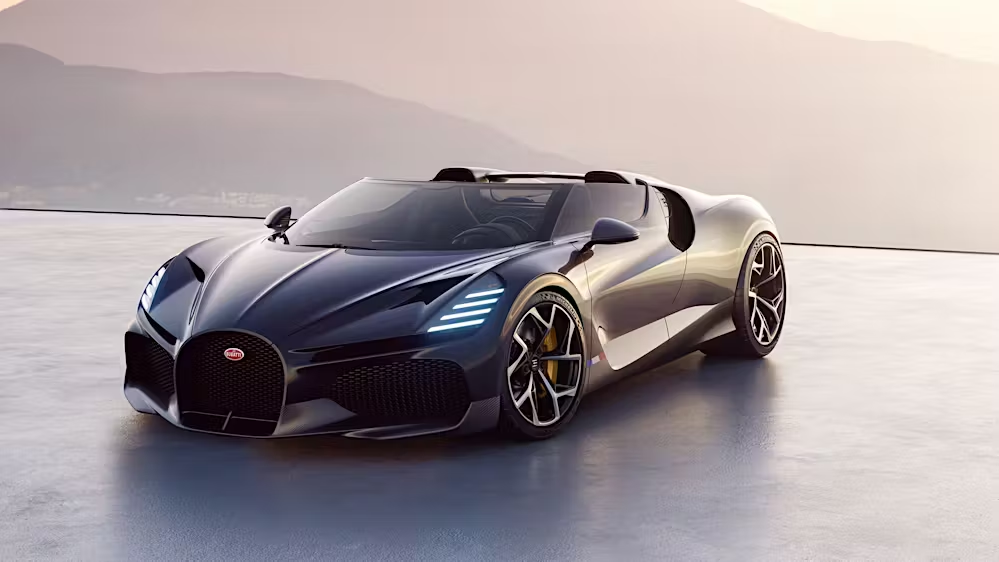
Vintage supercars have reemerged as highly sought after investment instruments. Limited production models from historically significant manufacturers are being acquired not only for aesthetic appeal but for their proven scarcity trajectory. These vehicles function as both collectible art pieces and mobile representations of wealth preservation.
Historic Diamonds and Exceptional Gemstone Provenance
In the gemstone segment, historic diamonds with documented provenance are commanding strong interest. Buyers are prioritizing stones with traceable ownership history, rare color grading, and cultural significance. The value proposition increasingly depends on narrative depth as much as physical characteristics.
The Expansion of Tokenized Luxury Estates
A major innovation in rare asset investing is the rise of tokenized luxury estates. High value properties are being fractionalized into digital ownership units recorded on secure blockchain systems. This enables controlled liquidity while preserving exclusivity of underlying physical assets, particularly in prime global real estate markets.
Wealth Manager Advisory Models Adapting Rapidly
Private wealth managers are restructuring advisory models to accommodate these hybrid portfolios. Instead of focusing solely on equities and bonds, they now integrate collectibles, alternative luxury assets, and digital ownership instruments into unified portfolio strategies tailored for ultra wealthy clients.
Scarcity Driven Value Acceleration
Across all rare asset categories, scarcity remains the dominant value driver. Whether it is a limited production supercar or a historically significant diamond, constrained supply combined with rising global demand continues to push valuation expectations upward over time.
Emotional and Identity Based Investment Behavior
Unlike traditional financial assets, rare investments often carry strong emotional and identity based motivations. Ownership signals taste, cultural awareness, and exclusivity. This psychological dimension plays a significant role in purchase decisions among elite investors.
The Role of Private Deal Networks and Off Market Access
Many high value transactions occur outside public marketplaces. Private dealers, advisory firms, and collector networks facilitate off market access to rare assets. These networks are becoming increasingly important in securing acquisition opportunities before public listing.
Digital Infrastructure Supporting Luxury Asset Trading
Technology platforms are enhancing transparency and efficiency in rare asset markets. Secure verification systems, provenance tracking tools, and digital authentication services are helping reduce friction and increase confidence in high value transactions.
Cross Border Wealth Diversification Strategies
Ultra High Net Worth individuals are distributing rare assets across multiple jurisdictions to optimize risk exposure and liquidity options. This geographic diversification reflects a broader trend toward globalized wealth structures that are less dependent on single market performance.
Luxury Assets as Legacy Planning Instruments
Rare assets are increasingly being used as intergenerational wealth transfer tools. Families are structuring portfolios that include collectibles, real estate, and digital assets designed to retain value and significance across generations.
Outlook for the Rare Asset Economy
The rare asset market is expected to continue expanding as wealth concentration increases and investors seek differentiated stores of value. The integration of physical collectibles with digital ownership systems is likely to define the next phase of luxury investing behavior globally.


Subscribe to unlock premium content
Sed at tellus, pharetra lacus, aenean risus non nisl ultricies commodo diam aliquet arcu enim eu leo porttitor habitasse adipiscing porttitor varius ultricies facilisis viverra lacus neque.
A comprehensive guide on Agile development

10 Productivity tools that are worth checking out

Top 7 Must have management tools for productivity

A comprehensive guide on Agile development
10 Productivity tools that are worth checking out
A comprehensive guide on Agile development