

Rare Pink Diamond Auctions Shatter Expectations as Wealthy Buyers Compete for Investment Grade Gems
By
John Carter
Last updated:
May 7, 2026
First Published:
May 7, 2026

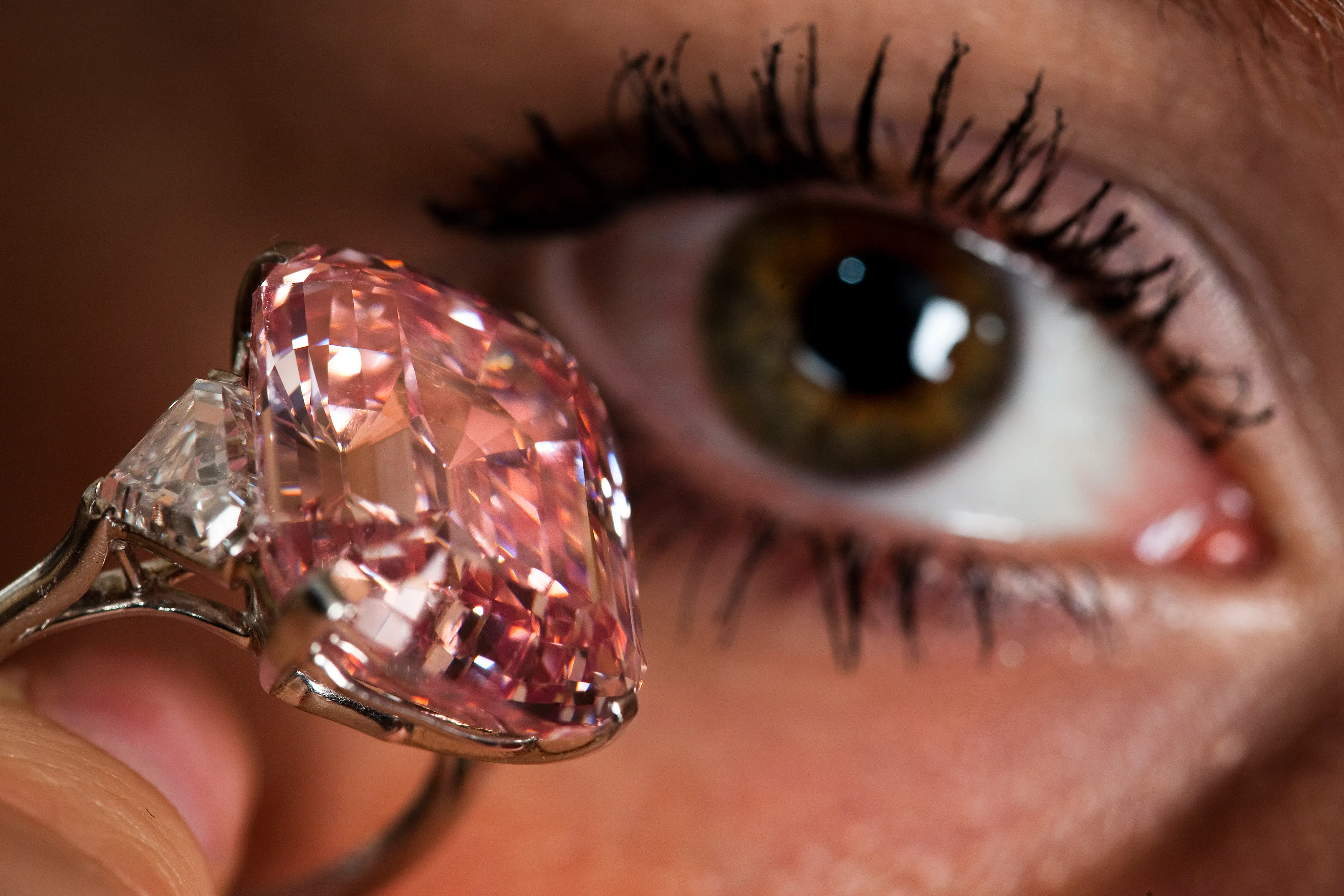
Photo: Swissinfo
A Surge in Global Demand for Pink Diamonds
In 2026, the global luxury auction market is experiencing unprecedented intensity around rare pink diamonds. These stones, already considered among the rarest natural gemstones on Earth, are now attracting extraordinary levels of attention from ultra high net worth collectors, sovereign wealth investors, and private luxury funds.
What was once viewed primarily as a symbol of romance and beauty has evolved into a serious investment class. Pink diamonds are now positioned alongside fine art, rare watches, and vintage collectibles as long term store of value assets for the ultra wealthy. The combination of extreme scarcity and rising global wealth has created a highly competitive environment where auction rooms regularly witness intense bidding wars.
Scarcity Is Driving Emotional and Financial Competition
The defining factor behind the explosive value of pink diamonds is their extreme scarcity. Only a limited number of mines in the world produce these stones, and even fewer yield diamonds of investment grade quality. As existing sources become depleted or restricted, availability continues to shrink while demand expands globally.
This imbalance has transformed auctions into highly emotional events. Wealthy buyers are not only competing financially but also psychologically, driven by the fear of missing out on assets that may never appear again in their lifetime. In many cases, winning a rare pink diamond is viewed as a personal milestone within elite collector circles.
Investment Grade Gemstones Are Becoming Institutional Assets
A major shift in 2026 is the increasing participation of institutional investors in gemstone auctions. Private investment firms and wealth management groups are now treating rare diamonds as alternative asset classes, similar to fine art or luxury real estate.
Pink diamonds in particular are being evaluated based on clarity, carat weight, color intensity, and provenance history. Stones with strong certification and traceable origin records are commanding significantly higher premiums due to their transparency and investment reliability.
This institutional involvement has further intensified competition, pushing auction prices to record levels and redefining expectations for what investment grade gemstones can achieve in global markets.
Auction Houses Are Experiencing Record Breaking Demand
Major international auction houses are reporting heightened interest in private sales and high profile gemstone auctions. Exclusive previews of rare pink diamonds are now often conducted behind closed doors, with select buyers invited to view collections before public bidding begins.
These events are carefully structured to maintain confidentiality and exclusivity. In many cases, potential buyers are required to register extensive proof of funds and undergo private vetting before being allowed to participate.
The result is a highly controlled and competitive environment where only the most serious collectors and investors are able to engage in bidding. This exclusivity has significantly increased both the prestige and final value of auctioned diamonds.
The Emotional Power of Colored Diamonds
Unlike traditional investment assets, pink diamonds carry a strong emotional and symbolic appeal. Their natural color variations, ranging from soft blush tones to intense vivid pinks, make each stone visually unique and highly desirable.
Collectors often describe these diamonds as both financial assets and personal treasures. Ownership represents not only wealth but also taste, exclusivity, and emotional connection to something truly rare in nature.
This emotional dimension plays a major role in driving auction competition. Buyers are often willing to exceed rational valuation models simply to secure a stone that resonates with their personal identity or collection vision.
Geographic Shifts in Luxury Gem Buying
The global market for pink diamonds is also experiencing geographic shifts. Wealthy buyers from Asia, the Middle East, and North America are increasingly dominating auction floors, contributing to rising international competition.
Luxury hubs such as Dubai, Hong Kong, Geneva, and New York are becoming central points for high value gemstone transactions. Private dealers and elite brokers are also expanding cross border networks to connect rare stones with qualified buyers before public auction listings.
This globalized demand has turned pink diamonds into truly international assets, with value determined not just by rarity but also by global investor sentiment.
Technology Is Enhancing Diamond Authentication
Advancements in gemological technology are playing a critical role in supporting the pink diamond market. High precision grading systems, advanced spectroscopy, and blockchain based certification methods are improving transparency and trust in gemstone transactions.
These innovations allow buyers to verify authenticity, trace origin, and assess quality with far greater accuracy than in previous decades. As a result, confidence in high value diamond investments has increased significantly among ultra wealthy collectors.
This technological evolution has also reduced risk in the luxury gemstone market, making it more attractive to institutional investors seeking stable alternative assets.
Pink Diamonds as Legacy Assets
For many ultra wealthy families, pink diamonds are no longer just luxury purchases but legacy assets intended to be passed down through generations. Their rarity and increasing global demand make them ideal long term holdings within private wealth portfolios.
Collectors often view these stones as emotional heritage objects that carry both financial and symbolic value. Unlike many other luxury items, rare diamonds do not depreciate with use or time, which further enhances their appeal as generational wealth instruments.
This long term perspective has contributed to stronger retention of high value gemstones within private collections, reducing market circulation and further increasing scarcity.
The Psychology of Ultra Wealth Collecting
The rise of pink diamond auctions also reflects a broader psychological shift in ultra wealth behavior. For many high net worth individuals, acquiring rare assets is not only about financial return but also about identity, status, and exclusivity.
Owning a rare pink diamond signals access to a world that is invisible to most people. It represents participation in a global elite culture where scarcity defines prestige and ownership reflects influence.
This psychological factor ensures that demand remains strong even during periods of economic uncertainty, reinforcing the resilience of the luxury gemstone market.
The Future of Rare Diamond Investment Markets
Looking ahead, experts expect the pink diamond market to become even more competitive as global wealth continues to expand and natural supply remains limited. Auction houses are likely to introduce more private sale formats and exclusive pre auction viewing systems to accommodate elite buyers.
At the same time, technological innovation and improved certification systems will likely strengthen investor confidence, attracting even more institutional capital into the sector.
Rare pink diamonds are no longer just beautiful gemstones. They have become powerful symbols of wealth preservation, emotional value, and elite identity within the global luxury economy.


Subscribe to unlock premium content
Sed at tellus, pharetra lacus, aenean risus non nisl ultricies commodo diam aliquet arcu enim eu leo porttitor habitasse adipiscing porttitor varius ultricies facilisis viverra lacus neque.
A comprehensive guide on Agile development

10 Productivity tools that are worth checking out

Top 7 Must have management tools for productivity

A comprehensive guide on Agile development
10 Productivity tools that are worth checking out
A comprehensive guide on Agile development