

Ultra Rich Collectors Spend Record Breaking Millions on Diamond Encrusted Timepieces at Geneva Auctions
By
Sophie Moore
Last updated:
May 14, 2026
First Published:
May 14, 2026

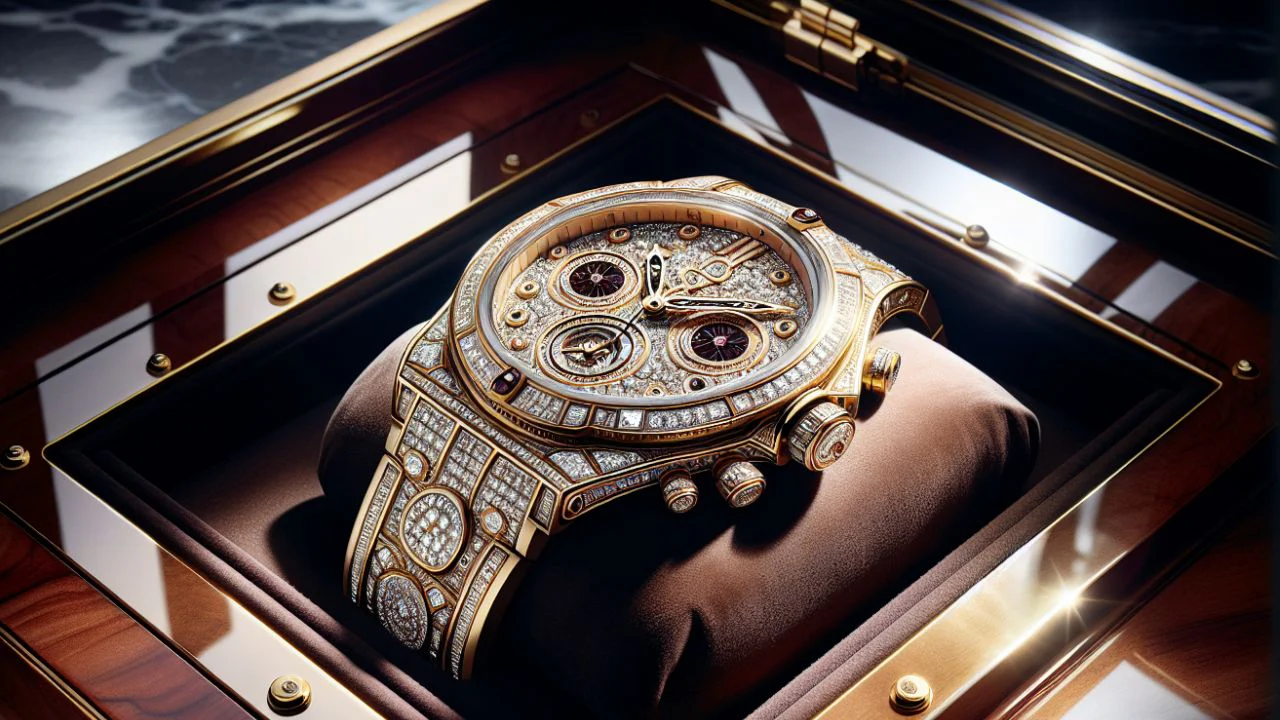
The Return of Extreme Watch Collecting Culture
The global luxury watch market has entered a new phase in 2026 where timepieces are no longer treated as functional accessories or even simple luxury goods. Instead they have become financial instruments, cultural artifacts, and highly engineered symbols of personal identity.
At the center of this transformation are diamond encrusted timepieces that are breaking auction records in Geneva and other elite luxury hubs. These watches are no longer just about telling time. They are about ownership of rarity, craftsmanship, and prestige that cannot be easily replicated.
Collectors from around the world, including tech founders, royal families, hedge fund managers, and celebrity investors, are competing aggressively for pieces that combine horological mastery with extreme gemstone artistry. The result is a market where prices are climbing into unprecedented territory.
Why Geneva Has Become the Global Stage for Luxury Auctions
Geneva remains the undisputed capital of high end watch auctions. The city has built a reputation over decades as the meeting point for the world’s most serious collectors and elite auction houses.
In 2026 Geneva auctions have reached new levels of intensity. Private bidding sessions often include ultra discreet participation from billionaires who prefer anonymity while competing for rare pieces. Many transactions occur behind closed doors before public auction events even begin.
The atmosphere is highly controlled, almost ritualistic. Watches are presented like museum artifacts rather than consumer products. Each piece carries a history of engineering precision, artistic design, and exclusivity that appeals directly to elite buyers seeking something beyond standard luxury goods.
Diamond Encrusted Timepieces as Modern Status Symbols
The most sought after watches in this new market are diamond encrusted masterpieces that combine traditional Swiss watchmaking with contemporary jewelry design. These timepieces often feature hundreds of individually set diamonds, rare gemstones, and custom engineered mechanical movements.
What makes them particularly valuable is not just their materials but their exclusivity. Many of these watches are produced in extremely limited numbers, sometimes fewer than ten pieces worldwide.
For ultra wealthy collectors, owning such a watch is not about practicality. It is about signaling access to a world that very few people can enter. The more unique and difficult a piece is to acquire, the more desirable it becomes.
In many cases these watches are never worn regularly. They are stored in private vaults, displayed during exclusive events, or used as investment assets within diversified luxury portfolios.
The Role of Celebrity and Billionaire Competition
Celebrity influence has played a major role in driving demand for diamond encrusted timepieces. High profile athletes, musicians, and actors frequently showcase rare watches at public events, indirectly fueling interest among collectors.
However, the most intense competition happens behind the scenes among billionaires and institutional collectors. Private bidding wars at Geneva auctions have reportedly pushed prices far beyond initial estimates, sometimes doubling or tripling expected values within minutes.
This competitive environment has turned watch collecting into a form of high stakes luxury rivalry. Owning the rarest piece becomes a matter of prestige within elite social circles rather than personal taste alone.
Craftsmanship That Borders on Art
One of the key reasons these watches command such extreme prices is the level of craftsmanship involved in their creation. Master watchmakers spend years developing a single complicated movement, ensuring precision that often exceeds industrial standards.
When combined with diamond setting and gemstone customization, each timepiece becomes a fusion of engineering and fine art. Some watches feature hand engraved cases, skeletonized movements, and intricate mechanical complications that require decades of accumulated expertise.
Luxury houses treat these creations as artistic legacies rather than commercial products. Every detail is designed to reflect perfection, from microscopic gear alignment to gemstone symmetry.
Collectors are essentially purchasing wearable art pieces that also function as precision instruments.
Investment Value Driving Collector Demand
Beyond emotional and aesthetic appeal, diamond encrusted watches are increasingly viewed as alternative investment assets. Wealth managers now include rare timepieces in diversified luxury portfolios alongside art, rare cars, and high end real estate.
Auction records from Geneva indicate consistent appreciation in value for historically significant watches. Limited supply combined with growing global wealth has created strong upward pressure on prices.
Some collectors purchase these watches purely for long term capital appreciation rather than personal use. In certain cases, pieces resold within a few years have achieved returns comparable to traditional financial investments.
This financial dimension has added a new layer of seriousness to the luxury watch market.
Auction Dynamics and High Pressure Bidding Culture
The auction environment itself has become a major spectacle. Geneva auction houses now attract elite bidders from multiple continents who participate both physically and through private remote bidding systems.
Bidding sessions can escalate rapidly, with rare timepieces reaching millions within seconds. Emotional decision making, competitive pride, and scarcity all contribute to aggressive bidding behavior among participants.
Auction houses carefully curate the presentation of each watch, emphasizing its provenance, craftsmanship, and exclusivity. This storytelling approach enhances perceived value and intensifies competition.
In many cases, the final sale price far exceeds initial estimates, reinforcing Geneva’s reputation as the epicenter of extreme luxury transactions.
The Influence of Limited Production Strategy
Luxury watchmakers have strategically embraced limited production models to maintain exclusivity. Instead of mass producing designs, they now focus on ultra small batch releases that ensure scarcity from the moment of creation.
This strategy has proven highly effective in maintaining high demand. Collectors are aware that missing an opportunity to acquire a piece may mean never encountering it again.
Diamond encrusted editions are often released as part of private collections or invitation only catalogs. This controlled distribution model reinforces the perception of exclusivity and drives secondary market value even higher.
The Emotional Psychology of Luxury Ownership
For many collectors, owning a diamond encrusted timepiece represents more than wealth display. It reflects personal achievement, legacy building, and emotional satisfaction derived from possessing something truly rare.
Luxury psychologists suggest that such purchases are often tied to identity formation among ultra high net worth individuals. The watch becomes a symbol of success, discipline, and personal history.
In elite circles these timepieces often carry storytelling value, passed between generations or preserved as family heirlooms. Their meaning extends far beyond material worth.
The Future of High End Watch Collecting
The diamond encrusted watch market shows no sign of slowing down. If anything, demand is expected to intensify as global wealth continues expanding and luxury collectors seek increasingly rare assets.
Geneva will likely remain the central hub of this ecosystem, but competition from emerging luxury auction markets is also expected to grow.
What is clear is that watches are no longer just instruments for measuring time. In 2026 they have become one of the most powerful expressions of extreme wealth, craftsmanship, and exclusivity in the world.
For ultra rich collectors, time itself has become something worth investing in.


Subscribe to unlock premium content
Sed at tellus, pharetra lacus, aenean risus non nisl ultricies commodo diam aliquet arcu enim eu leo porttitor habitasse adipiscing porttitor varius ultricies facilisis viverra lacus neque.
A comprehensive guide on Agile development

10 Productivity tools that are worth checking out

Top 7 Must have management tools for productivity

A comprehensive guide on Agile development
10 Productivity tools that are worth checking out
A comprehensive guide on Agile development