

How AI Is Changing the Way Billionaires Manage Personal Staff and Household Operations
By
Sophie Moore
Last updated:
June 3, 2026
First Published:
June 3, 2026

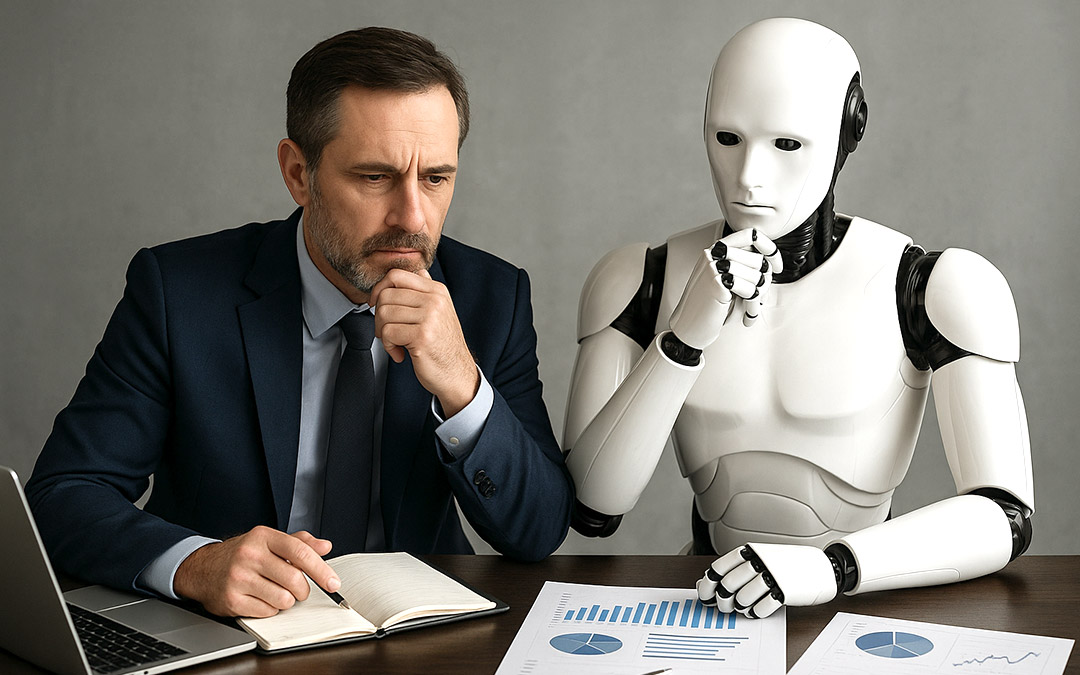
Photo: Alden Investment Group
A New Era of Household Management
Artificial intelligence has already transformed industries such as finance, healthcare, retail, and transportation. Now, it is beginning to reshape one of the most private aspects of affluent life: household management. Billionaires and ultra wealthy families are increasingly adopting advanced AI powered systems to oversee complex domestic operations that once required constant human supervision.
Large estates, multiple residences, extensive staff teams, private travel arrangements, and demanding schedules create operational challenges that can rival those of major businesses. As technology becomes more sophisticated, many wealthy households are turning to artificial intelligence to streamline these responsibilities and improve overall efficiency.
The result is a new era where luxury living is supported by intelligent systems capable of handling countless tasks behind the scenes.
Managing Complex Households Like Businesses
Modern billionaire households often operate on a scale that resembles a corporate organization. Many families employ chefs, drivers, security professionals, housekeepers, personal assistants, gardeners, maintenance specialists, and lifestyle managers.
Coordinating these teams requires careful scheduling, communication, and resource management. Artificial intelligence is increasingly being used to organize workflows, track responsibilities, monitor performance, and improve coordination among staff members.
By automating administrative processes, households can operate more smoothly while reducing inefficiencies that often arise when managing large teams manually.
Smarter Scheduling and Daily Planning
One of the most significant applications of AI involves scheduling and time management. Wealthy individuals often maintain packed calendars filled with business meetings, travel commitments, family activities, and social engagements.
Advanced AI systems can analyze schedules, identify conflicts, suggest adjustments, and coordinate logistics automatically. These systems can also account for factors such as travel time, weather conditions, security requirements, and personal preferences.
The ability to optimize daily routines allows affluent individuals to focus more attention on strategic decisions and personal priorities rather than operational details.
Enhancing Communication Across Staff Teams
Effective communication is essential in households with large staff structures. Artificial intelligence is helping improve coordination by providing centralized platforms where information can be shared instantly and accurately.
Tasks can be assigned automatically, updates can be delivered in real time, and reminders can be generated without requiring manual oversight. Staff members gain greater visibility into daily responsibilities, reducing misunderstandings and improving accountability.
For families managing multiple properties in different locations, these communication tools provide consistency across all residences.
Personalized Service Reaches New Levels
Luxury has always been associated with personalization. Artificial intelligence is taking this concept further by learning the habits, preferences, and routines of household members.
AI systems can remember dining preferences, preferred room temperatures, travel habits, entertainment choices, wellness routines, and scheduling patterns. This information allows households to deliver highly customized experiences that anticipate needs before requests are even made.
The result is a level of convenience and personalization that was difficult to achieve through manual processes alone.
Security Becomes More Intelligent
Security remains a top priority for billionaire families, and artificial intelligence is becoming a valuable component of modern protection strategies.
Advanced monitoring systems can analyze activity across large properties, identify unusual behavior, and provide immediate alerts when potential concerns arise. AI can also assist with visitor management, access control, and surveillance analysis.
Rather than replacing human security professionals, these technologies enhance their effectiveness by providing more accurate information and faster response capabilities.
AI Driven Property Maintenance
Luxury residences often include extensive facilities such as guest houses, wellness centers, private theaters, wine cellars, and expansive outdoor spaces. Maintaining these properties requires continuous oversight.
Artificial intelligence can monitor equipment performance, track maintenance schedules, and identify potential issues before they become expensive problems. Smart systems can analyze energy usage, water consumption, and environmental conditions to improve efficiency while maintaining comfort.
Predictive maintenance has become particularly valuable because it helps prevent disruptions and protects significant property investments.
Revolutionizing Private Travel Coordination
Many affluent families rely on private aviation and personalized travel services. Coordinating these experiences requires careful planning involving transportation, accommodations, security arrangements, and scheduling.
AI powered platforms can simplify these processes by analyzing travel preferences, identifying optimal routes, managing reservations, and anticipating logistical needs. Real time adjustments can be made quickly when circumstances change.
This level of coordination helps ensure smooth travel experiences while reducing administrative burdens on personal assistants and household managers.
Supporting Wellness and Lifestyle Goals
Health and wellness have become major priorities among wealthy individuals. Artificial intelligence is increasingly being used to support these objectives through personalized lifestyle management.
Smart systems can monitor sleep patterns, fitness activity, nutrition plans, and recovery habits. Recommendations can be adjusted based on changing goals and performance data.
Some households are integrating wellness technologies throughout their residences, creating environments designed to support physical health, mental clarity, and overall wellbeing.
The Human Element Remains Essential
Despite rapid technological advancements, artificial intelligence is not eliminating the need for skilled household professionals. Instead, it is changing how they work.
Experienced staff members continue to provide judgment, creativity, emotional intelligence, and personalized service that technology cannot fully replicate. AI serves as a support tool that enhances productivity and improves operational efficiency.
Many household managers view artificial intelligence as a valuable assistant rather than a replacement for human expertise.
Ethical and Privacy Considerations
As AI becomes more integrated into private households, questions surrounding privacy and data security are receiving increased attention. Wealthy families often manage highly sensitive personal and financial information.
Protecting this data requires robust cybersecurity measures and careful oversight of technology providers. Families must balance the benefits of convenience and automation with the need to safeguard personal privacy.
The most successful implementations are likely to be those that combine advanced functionality with strong security standards and transparent data practices.
The Future of Intelligent Luxury Living
Artificial intelligence is expected to play an increasingly important role in luxury household management over the coming years. As systems become more capable, they will likely handle a wider range of responsibilities while delivering even greater levels of personalization.
Future developments may include more advanced predictive technologies, deeper integration across household systems, and enhanced decision support capabilities. These innovations could further simplify the management of complex lifestyles while improving efficiency and comfort.
For billionaire families, intelligent household operations are becoming an important part of modern luxury living.
Artificial intelligence is transforming how wealthy families manage personal staff, properties, travel arrangements, and daily operations. By automating routine tasks, improving coordination, enhancing security, and delivering personalized experiences, AI is helping affluent households function with greater precision and efficiency.
While human expertise remains indispensable, technology is increasingly serving as a powerful partner in luxury household management. As innovation continues to accelerate, AI is set to become a defining feature of how the world's wealthiest individuals organize and experience their everyday lives.




Subscribe to unlock premium content
Sed at tellus, pharetra lacus, aenean risus non nisl ultricies commodo diam aliquet arcu enim eu leo porttitor habitasse adipiscing porttitor varius ultricies facilisis viverra lacus neque.
A comprehensive guide on Agile development

10 Productivity tools that are worth checking out
Top 7 Must have management tools for productivity

A comprehensive guide on Agile development
10 Productivity tools that are worth checking out
A comprehensive guide on Agile development