
Dubai’s Expat Reality Check: Why 2026 is the Ultimate Stress Test for the 'Oasis of Certainty'
By
Sophie Moore
Last updated:
March 23, 2026
First Published:
March 23, 2026

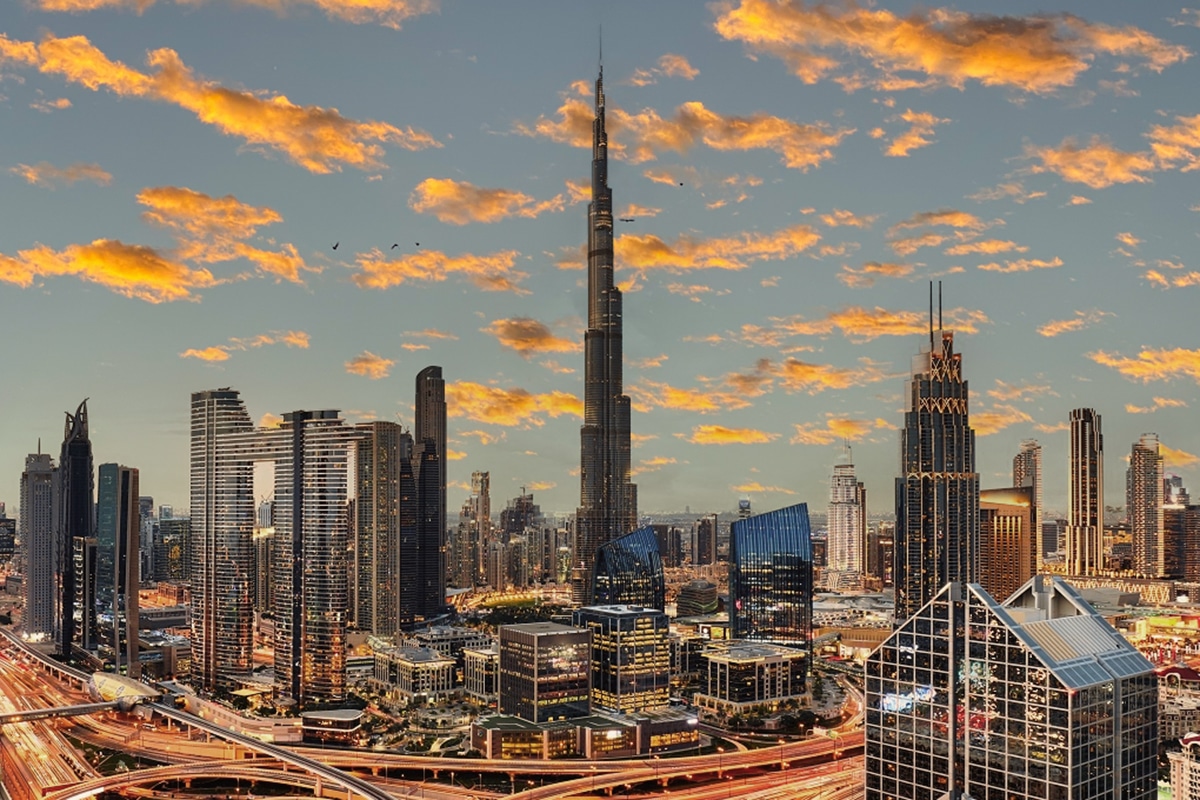
For nearly two decades, Dubai has meticulously cultivated a reputation as a sovereign sanctuary—a tax-free "Oasis of Certainty" where the global elite could park their capital and their families with absolute confidence. However, as we move through the first quarter of 2026, that carefully managed veneer of invulnerability is facing its most significant challenge yet. The escalation of regional military conflicts and direct security threats have shattered the assumption that the emirate exists in a vacuum of insulation. For the sophisticated audience of RichReflector, the "Dubai Dream" is no longer a guaranteed bet but is being aggressively re-priced in a high-risk, high-reward environment where physical and financial safety are once again top-of-mind.
The Psychological Impact of a Compromised Security Envelope
The core value proposition for Dubai’s 88% expatriate population has always been the triad of wealth accumulation, a frictionless lifestyle, and total physical safety. Recent kinetic events, including missile interceptions over iconic landmarks and temporary closures of Dubai International Airport, have fundamentally altered the residency calculus. When "interception booms" become part of the daily soundscape, the high-net-worth individual begins to view their luxury villa not just as an asset, but as a potential liability. This security shock has triggered a sudden shift to a "risk-off" mood, with transaction volumes in the property market reportedly falling by half in the initial weeks of the conflict.
British Investors and the New Calculation of Residency
The United Kingdom has historically been one of the top five sources of foreign investment in Dubai real estate, with British families increasingly viewing the city as a permanent base rather than a temporary stopover. However, the current instability has forced many to reconsider the "cost of entry" for this lifestyle. Global agencies and the UK Foreign Office have had to move from theoretical planning to active contingency measures for citizens, creating a sense of unease that the tax-free benefits may no longer outweigh the potential for logistical paralysis. For the British expat, the once-unquestioned "security premium" paid through high rents is currently failing to yield a 100% guarantee of safety.
Real Estate as the Mirror of Shifting Global Confidence
Real estate and construction contribute roughly 15% of Dubai’s GDP, making the sector a vital barometer for foreign confidence. Unlike previous downturns that were driven by economic or health shocks, the 2026 "stress test" is a pure security shock. Data from the Dubai Land Department shows a stark divergence: while the off-plan market remains somewhat insulated by long-term developer backlogs, the secondary market and luxury villa segments have borne the brunt of the slowdown. Investors are adopting a "wait and watch" approach, questioning whether the city's infrastructure and neutral standing can withstand a prolonged period of regional friction without a significant price correction.
The Looming Shadow of the Luxury Supply Wave
The timing of this geopolitical tension is particularly sensitive given the massive wave of new inventory hitting the market. Analysts estimate that upwards of 110,000 residential units are scheduled for delivery in 2026—a figure nearly four times the ten-year average. While the city's population recently surpassed the four-million milestone, the ability to absorb this surplus depends entirely on the continued influx of international capital and talent. If the "safe haven" narrative continues to erode, the emirate could face an oversupply of luxury villas and off-plan apartments with no buyers, putting downward pressure on prices that have seen near-60% surges since 2022.
From Performance to Protection: The Evolution of HNW Preferences
High-net-worth individuals who moved to the UAE for tax or lifestyle reasons are now prioritizing "sovereign risk" in their portfolio management. In the early 2020s, the focus was on yields and capital appreciation; in 2026, the focus has shifted to liquidity and exit strategies. There has been a recorded spike in demand for private jets as the wealthy seek to maintain a "mobile balance sheet." This evolution reflects a broader trend among the global elite: wealth is only as valuable as the stability of the jurisdiction in which it is held. For many, the current climate is a reminder that even the most glittering skyline requires a foundation of regional peace to maintain its luster.
The Role of Government Policy as a Stabilizing Force
To combat the "risk-off" sentiment, the UAE government is leaning heavily on legislative reforms to anchor its resident base. The expansion of the Golden Visa and Green Visa programs has created a layer of "stickiness" for long-term residents who have invested significantly in the country's future. By converting temporary workers into deeded property owners, the state is attempting to build a demographic buffer that is less likely to flee at the first sign of trouble. These policies are designed to signal that Dubai is committed to its long-term vision of becoming a global capital, even as it navigates the turbulence of its immediate neighborhood.
Assessing the Resilience of the UAE Corporate Ecosystem
Despite the headlines, the institutional depth of Dubai’s financial centers remains a point of strength. The Dubai International Financial Centre (DIFC) and Abu Dhabi Global Market (ADGM) continue to see growth in regulated firms and asset managers. This institutionalization suggests that while individual "speculative" investors may be pulling back, the underlying financial infrastructure is maturing. Capital often seeks predictability over yield, and the UAE’s established legal frameworks and tax efficiency still represent a formidable hedge against the fiscal drag and political friction seen in parts of Europe and North America.
A Forecast of Moderation Rather than Collapse
Most major ratings agencies and financial institutions, such as S&P Global and UBS, suggest that while a slowdown is inevitable, a 2008-style crash is unlikely. The low leverage of major developers and high current occupancy rates provide a cushion that did not exist in previous cycles. Instead of a total collapse, 2026 is likely to be a year of "healthy realignment," where the overheated property sector cools down to more sustainable levels. For the disciplined investor, this period of uncertainty may even create buying opportunities as prices soften, provided they have the stomach for a "high-beta" environment and a long-term belief in the region’s strategic importance.
Final Thoughts for the Sovereign Global Citizen
For the readers of RichReflector, the Dubai reality check of 2026 is a masterclass in the importance of geographic diversification. The "Dubai Dream" isn't dead, but it has grown up. It is no longer a playground of consequence-free accumulation but a strategic hub that requires a sober calculation of risk. As the region seeks to rebuild trust and de-escalate tensions, the city’s ability to remain an open, tax-efficient transit point for the world’s capital will be its greatest test. Those who stay will be those who value the emirate’s unique positioning enough to weather the storm, betting that the "Oasis of Certainty" can once again find its calm in a restless world.


Subscribe to unlock premium content
Sed at tellus, pharetra lacus, aenean risus non nisl ultricies commodo diam aliquet arcu enim eu leo porttitor habitasse adipiscing porttitor varius ultricies facilisis viverra lacus neque.
A comprehensive guide on Agile development

10 Productivity tools that are worth checking out

Top 7 Must have management tools for productivity

A comprehensive guide on Agile development
10 Productivity tools that are worth checking out
A comprehensive guide on Agile development